
BEKRIA
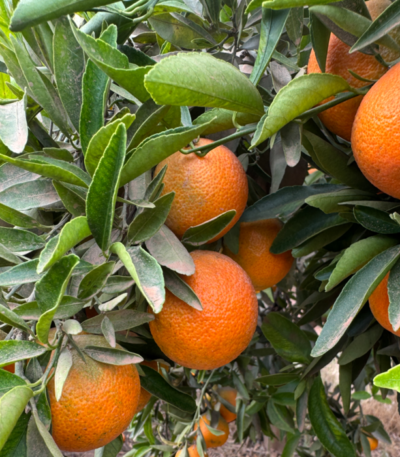
The BEKRIA is a Moroccan variety, originating from a natural mutation discovered in September 1968.
The tree has low vigor and very dense foliage. It is highly productive, making thinning necessary to obtain medium-sized fruits.
The fruits are juicy and generally seedless, making this variety popular for fresh consumption or juice processing.
ESBAL
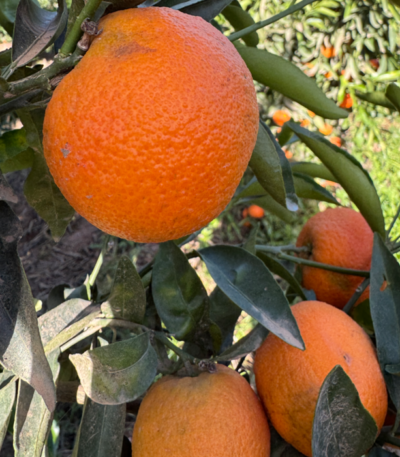
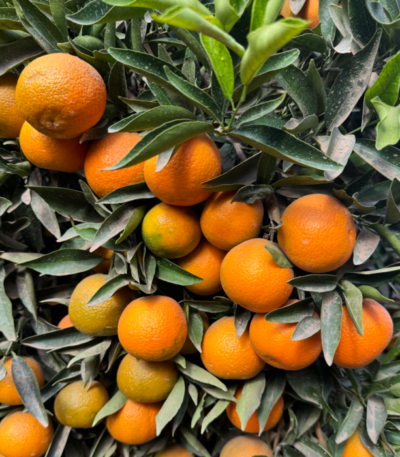
The ESBAL is a mid-season seedless clementine variety, originating from a bud mutation of the Fina variety, discovered in 1966 in Sagunto, Valencia, Spain. It is valued for its excellent eating qualities, featuring a remarkable flavor, fine and tender flesh, as well as an easy-to-peel skin with a bright, attractive orange color.
The harvest generally takes place 2 to 3 weeks after the Marisol and Bakria varieties.
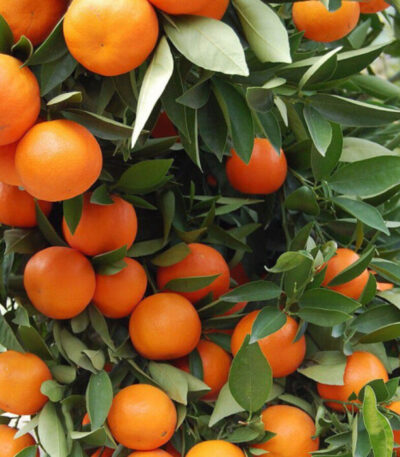
GUERDANE
The fruits are firm, oval-shaped, with smooth and thick skin, yet remain easy to peel.
The harvest period extends from January to March, making Guerdane an ideal clementine to extend the citrus availability season.
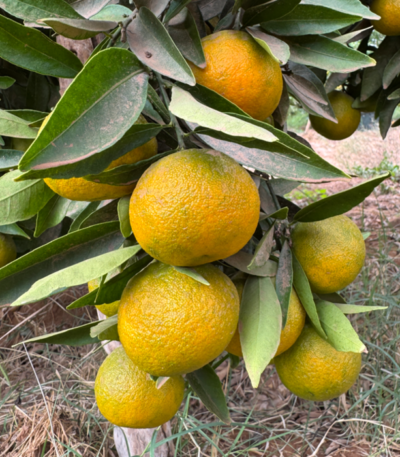
LARACHE
The LARACHE is a seasonal clementine variety resulting from a natural mutation of the Cadoux clementine, discovered in Morocco in 1984.
The tree is vigorous with dense foliage and is known for good production.The fruit is characterized by a thicker skin than Cadoux, generally large in size, yet remains easy to peel.
The harvest period extends from October to December.
MARISOL
The MARISOL is a Spanish variety resulting from a natural mutation of the ‘Oroval’ clementine, discovered in 1970.
It is known for its early maturity, ripening about two weeks before ‘Oroval’, with a harvesting period from late September to early October.
The fruits are usually picked just after color break and are then degreened to enhance their commercial
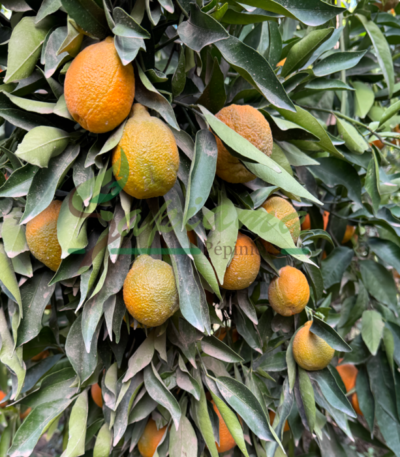
NOUR
The NOUR is a mutation of the ‘Cadoux’ variety discovered in Morocco in 1962. It is characterized by a high foliage density. The fruit is spherical and medium-sized, with a slightly rough rind.
This is a productive and late-season variety, with maturity occurring from mid-January to late February or early March.
During the early years of its production, it was exported under the name ‘Sunerine’. It was only in the early 1990s that its name was changed to ‘Nour’.
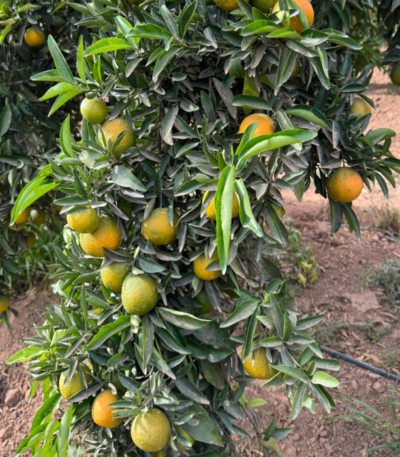
NULES
Also known as ‘Clemenules’, ‘Nulesina’, ‘Clementina Reina’, ‘Clementina Victoria’, and ‘Reina y Gorda de Nules’.
It is a mutation of the ‘Fina’ variety discovered in Nules, in the province of Castellón de la Plana, in 1953.
It is larger and slightly earlier than ‘Fina’; seedless and of excellent quality.
OROGRANDE
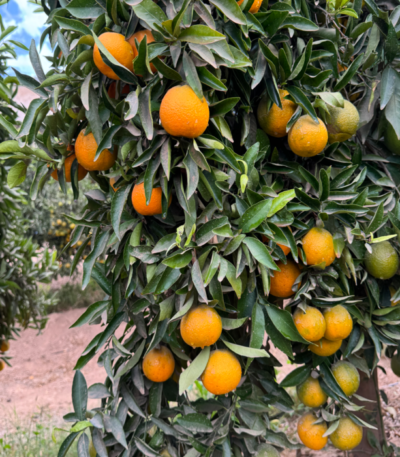
The Orogrande It is a mutation of the Nules clementine of unknown origin. This selection was introduced in South Africa in 1992.
The fruit is larger and more uniform in size than that of Nules, with slightly earlier maturity.
The tree has a fairly rounded shape, similar to that of Nules, although it can sometimes exhibit a slightly upright growth habit.
SIDI AISSA
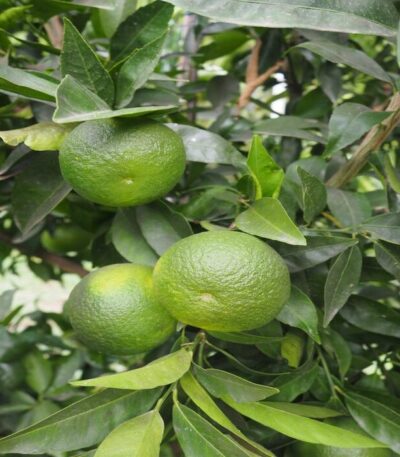
The Sidi Aissa mandarin, a Moroccan variety derived from a mutation of the Fine Clementine, is characterized by round, well-colored, juicy, seedless fruits that are easy to peel. It reaches maturity between mid-October and late December