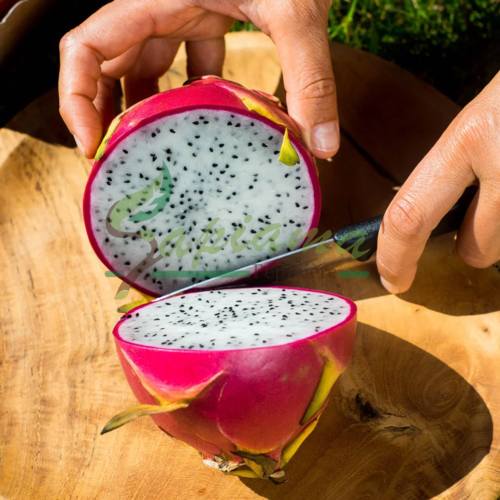
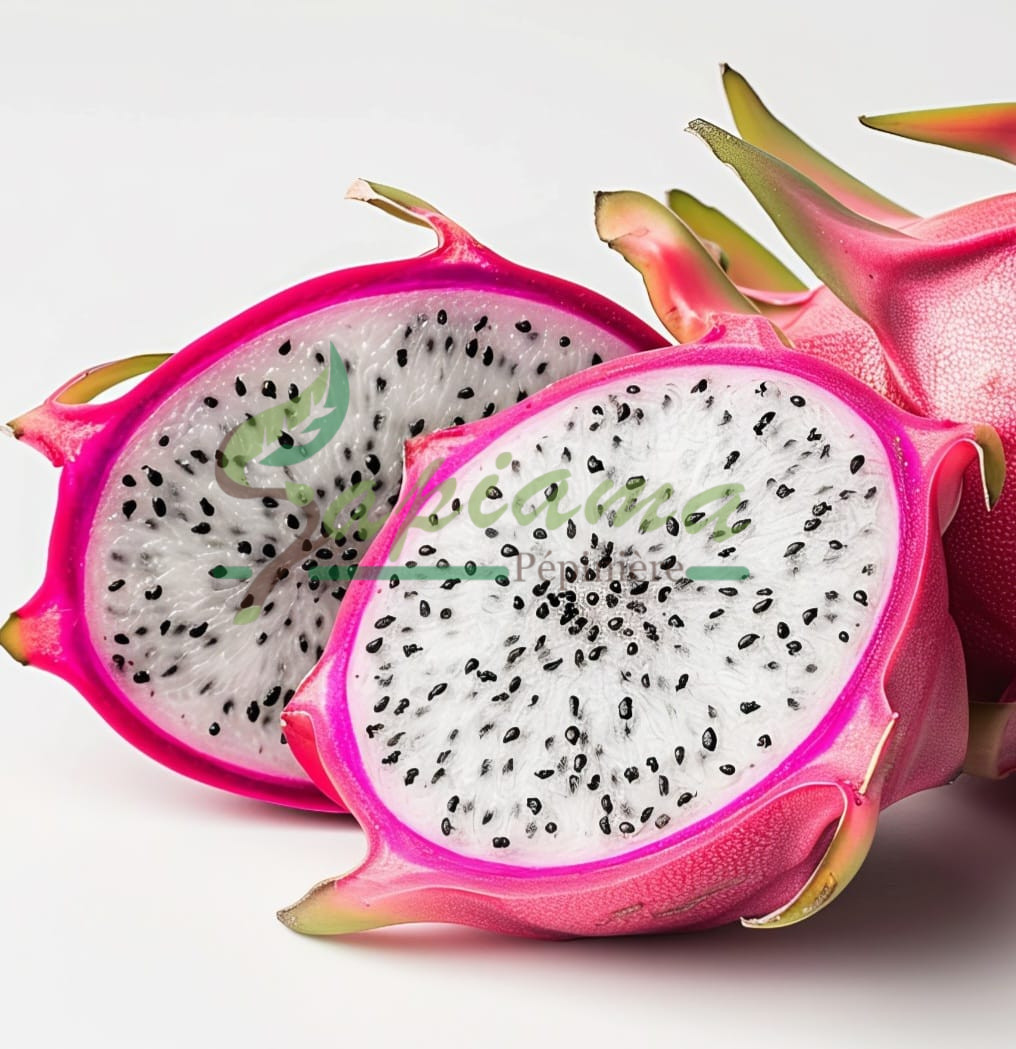
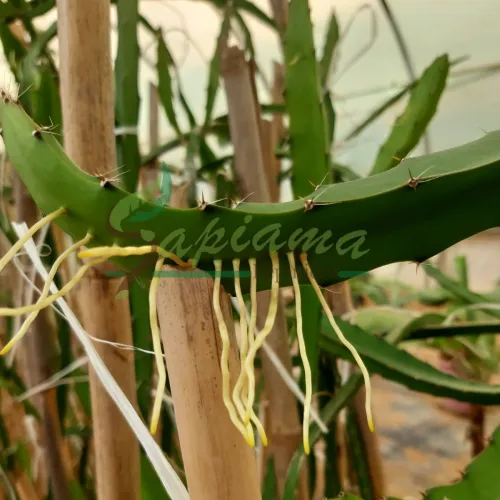
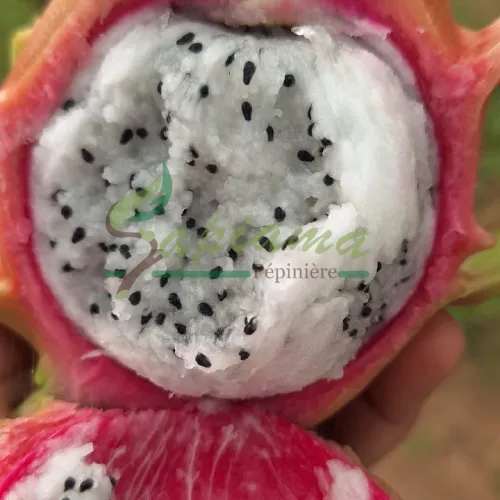
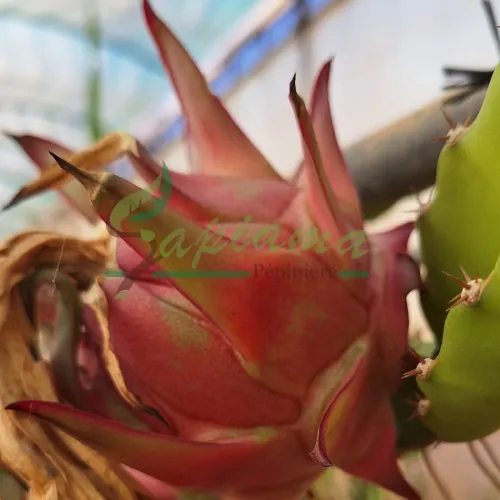
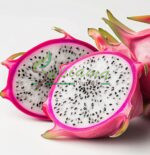
Hylocereus undatus, commonly known as white-fleshed pitaya or white dragon fruit, is a climbing cactus native to Central America and widely cultivated in tropical and subtropical regions worldwide. The plant has fleshy, triangular green stems that require support for optimal growth and demonstrates good drought tolerance with well-drained soil and proper irrigation. It produces large, nocturnal, fragrant flowers that bloom multiple times per year under favorable conditions and are primarily pollinated by bats or night insects. The fruits are oval with bright pink skin and green-tipped scales, containing sweet, juicy white pulp dotted with small edible black seeds. Harvest is done manually when fruits reach full maturity, generally from June to September in the Northern Hemisphere. White pitaya is valued for its mild, refreshing flavor, nutritional content including vitamins, minerals, fiber, and antioxidants, and its versatility for fresh consumption, juices, jams, and desserts. Its striking appearance and commercial potential make Hylocereus undatus a profitable and highly appreciated crop for both local and export markets.