

AISSAOUIA
The Aissaouia carob tree has medium-strong vigor and produces female-type flowers. Flowering begins in September, and at maturity, the tree can yield over 100 kg of pods. This variety is resistant to powdery mildew and does not exhibit alternate bearing. The pods are notable for their high seed content, reaching 28.47%, with an average width of 1.36 cm and a length of 11.39 cm. Harvesting starts in July. This clone is highly vegetative, and both pod quality and overall production depend on several factors, including fertigation programs and orchard management practices.
ANAROUSE
The Anarouse carob tree has very strong vigor and produces female-type flowers. Flowering begins in September, and at maturity, the tree can yield over 150 kg of pods. This variety is resistant to powdery mildew and does not exhibit alternate bearing. The pods of this clone have a seed content of 22.5%, with an average width of 1.3 cm and a length of 14.5 cm. Harvesting starts in July. This clone enters production quickly and produces very thick pods, making it particularly suitable for carob flour production. Pod quality and overall yield, however, depend on several factors, including fertigation programs and orchard management practices.
ARBEQUINE
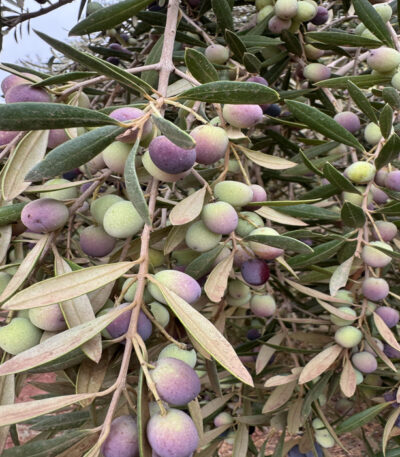
The Arbequine olive variety, classified as an oil cultivar, likely originates from the village of Arbeca in the Lleida region of Spain. The tree has low vigor and limited growth, making it well-suited for high-density orchards. This variety is highly valued for its consistently high productivity and the excellent quality of its oil, which is characterized by good organoleptic properties, although its stability is relatively low. The fruit is a small, round olive weighing less than 2 g, producing a mild-tasting oil. Harvest is early, typically starting in December.
ARBOSANA
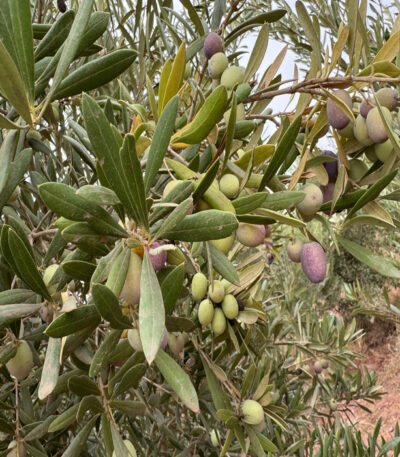
The Arbosana olive variety, classified as an oil cultivar, originates from the Penedès region and likely takes its name from the village of L’Arboç in Tarragona, Spain. The tree has low vigor but enters production quickly, making it suitable for high-density orchards. It is a very productive variety, ripening later than Arbequina, with per-hectare yields often higher in comparative trials. Arbosana oil is fruity and has good stability. The fruit is spherical, slightly asymmetrical, and turns purple when fully ripe. Harvest is late, starting from January.
ASEF
The Asef carob tree has strong vigor and produces female-type flowers. Flowering begins in June, and at maturity, the tree can yield over 150 kg of pods. This variety is resistant to powdery mildew and does not exhibit alternate bearing. The pods of this clone have a seed content of 24.5%, with an average width of 1.3 cm and a length of 14 cm. Harvesting starts in August. The pods are thick and particularly suitable for carob flour production. Pod quality and overall yield, however, depend on several factors, including fertigation programs and orchard management practices.
ASOULILE
The Asoulile carob tree has strong vigor and produces male-type flowers. Its flowering period extends from July to November. This variety is resistant to powdery mildew and does not exhibit alternate bearing. This clone serves as an excellent pollinator for female varieties Tafoukt and Tadmait. It is important to note that the flowering of this clone depends on several factors, including climatic conditions and orchard management practices.
ASSOLE
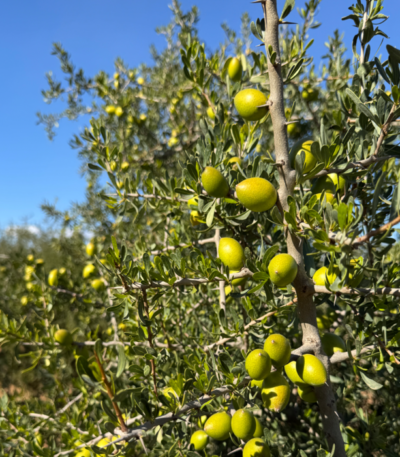
The Assole argan tree is moderately vigorous and sparsely thorny, flowering throughout the year, which ensures a continuous production of seeds and flowers simultaneously. At maturity, it can yield over 100 kg. This variety does not exhibit alternate bearing. The fruits are round in shape, with a crushing yield of 28% and an oil content of 44%. The harvest period extends from May to October. Argan oil quality and yield depend on several factors, including fertigation programs, orchard management, planting region, and climatic conditions. This variety also demonstrates
remarkable drought resistance, making it an ideal choice to address the challenges of climate change.
ATLAS
The Atlas carob tree has medium-strong vigor and produces hermaphrodite flowers. Flowering begins in September, and at maturity, the tree can yield over 90 kg of pods. This variety is resistant to powdery mildew and does not exhibit alternate bearing. The pods of this clone have a very high seed content of 28.47%, with an average width of 1.3 cm and a length of 12 cm. Harvesting starts in August. This clone is particularly used as a pollinator for female trees. Pod quality and overall yield depend on several factors, including fertigation programs and orchard management practices.
BARNEA
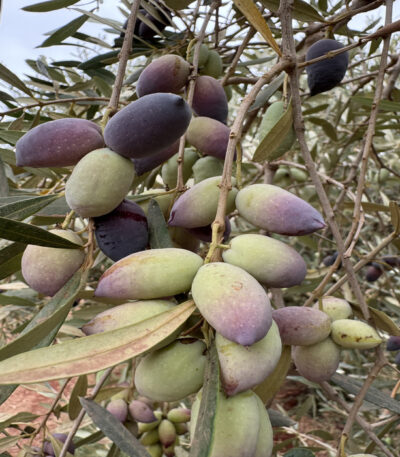
The Barnea is a modern olive cultivar, originating from Israel (where it is also known as K-18), specifically bred for intensive, mechanized cultivation in irrigated orchards. It is distinguished by its dual-purpose nature: it produces both table olives and a good quality, fruity olive oil, often characterized by notes of fresh grass and artichoke. The tree itself is vigorous with an erect growth habit. The fruits, which are medium-sized, change from pale green to deep black at full ripeness. Their maturity for green table olives is relatively early, while full maturity for oil is mid-season. Barnea offers excellent, early yields but is highly dependent on adequate irrigation and generally requires a pollinator to maximize its productivity.
BEKRIA
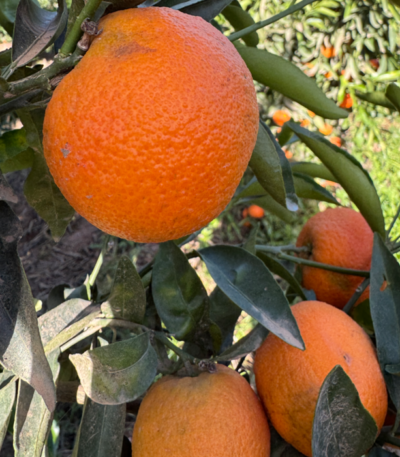
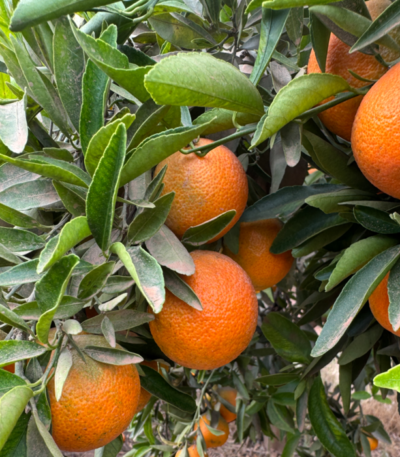
The BEKRIA is a Moroccan variety, originating from a natural mutation discovered in September 1968.
The tree has low vigor and very dense foliage. It is highly productive, making thinning necessary to obtain medium-sized fruits.
The fruits are juicy and generally seedless, making this variety popular for fresh consumption or juice processing.
CACTUS
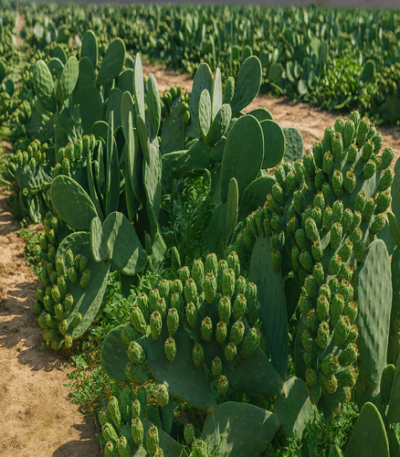
The traditional Opuntia ficus-indica varieties from the Ait Baamrane region in southern Morocco are perfectly adapted to arid and semi-arid climates. The plants are robust and drought-tolerant, with upright or slightly spreading cladodes. They produce large, fleshy fruits with thick skin that ranges from green to reddish-purple at maturity, containing sweet, juicy pulp with numerous small seeds. Flowering occurs during the warm months, and fruiting generally extends from summer to early autumn, depending on climatic conditions and a well-managed fertigation program. These varieties are valued for their high sugar content, excellent flavor, and versatility, whether for fresh consumption or processing into jams, juices, and other products. The Ait Baamrane cactus pear plants are cultivated in commercial orchards, contributing significantly to local incomes and food security in the region.