
MARISOL
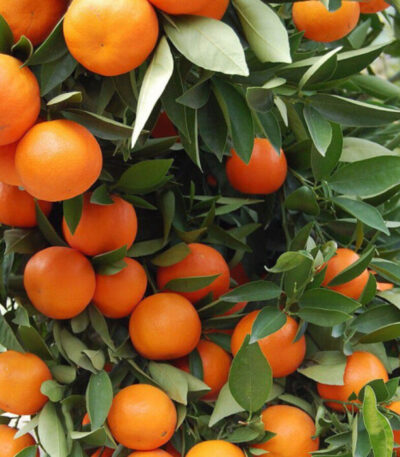
The MARISOL is a Spanish variety resulting from a natural mutation of the ‘Oroval’ clementine, discovered in 1970.
It is known for its early maturity, ripening about two weeks before ‘Oroval’, with a harvesting period from late September to early October.
The fruits are usually picked just after color break and are then degreened to enhance their commercial

MASSINE
The Massine carob tree has medium-strong vigor and produces male-type flowers. Its flowering period extends from June to October. This variety is resistant to powdery mildew and does not exhibit alternate bearing. This clone serves as an excellent pollinator for female varieties such as Anarouse, Aissaouia, and Yamina. It is important to note that the flowering of this clone depends on several factors, including climatic conditions and orchard management practices.
MENARA
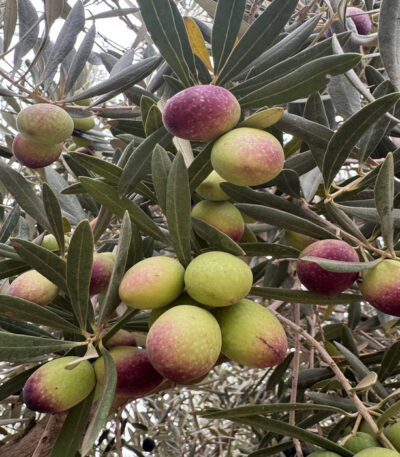
The Menara olive variety is a Moroccan cultivar developed by the National Institute of Agronomic Research (INRA). It is a dual-purpose variety, primarily used for olive oil production but also suitable as table olives. The tree has medium vigor with an upright to semi-upright growth habit. Flowering occurs from medium to early season, and harvesting takes place mid-season. The fruits are medium-sized, oval, with an oil yield of 16–18%. This variety is productive, well adapted to Moroccan conditions, and produces fruity and balanced oil. It also shows good tolerance to certain diseases, although it remains sensitive to the olive fruit fly.
MEXICAIN LIME
Origin :
Originally from tropical regions, this lime is known in Morocco as Doc. It is widely used in cooking, for juice, and as a natural substitute for lemon.
Fruit Description :
The Mexican lime (or West Indian lime) is a small round fruit, turning yellowish-green when ripe. Its rind is very thin and smooth, while the flesh is juicy, highly acidic, and aromatic, containing 10 to 12 segments.
Tree Description :
A medium-sized tree with a bushy, spreading habit, highly productive. Its foliage is dense and pale green, with small oval leaves and delicate flowers slightly tinged with purple. Flowering is almost continuous throughout the year, with peaks in spring and late summer.
Yield :
A well-maintained mature tree can produce an average of 20 to 30 kg of fruit per year, depending on growing conditions and climate.
MIDKNIGHT
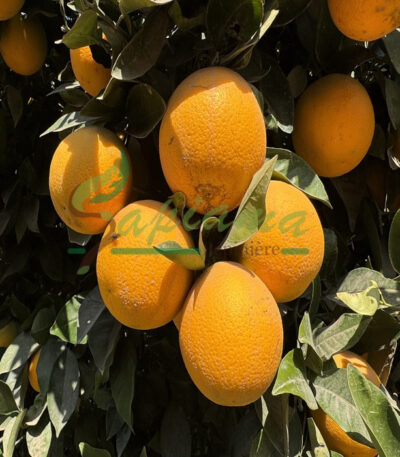
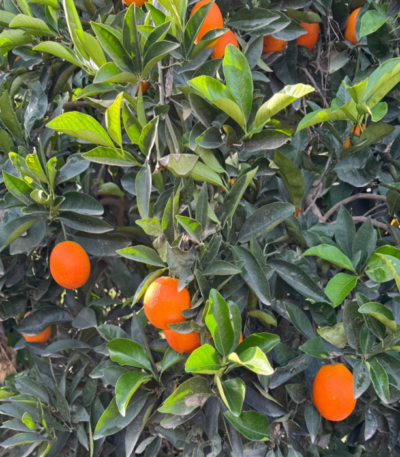
Midknight is a sweet orange variety of unknown origin, first noted as an earlier-maturing tree in a Valencia orchard in Addo, Cape Province, South Africa. The tree is less vigorous than the Valencia Late but grows quickly and achieves good size.
The fruit is considerably larger than Valencia oranges and matures two to four weeks earlier, while still remaining on the tree as long as Valencia. It has an oblong shape, with a harvest period extending from March to July.
NEW HALL
New hall is an early navel orange from California, discovered on a branch of the Washington Navel. It is prized for its earliness, allowing harvest from mid-October—about two weeks before the Washington Navel—providing an advantage for degreening and extending the commercial orange season.
Tree :
The tree is vigorous, medium-sized, with steady and healthy growth. Its leaves are slightly darker than those of the Washington Navel, and its slightly lower vigor makes orchard management easier.
Fruit :
The fruits are smaller and more oval than Washington Navel oranges, with a smaller, less prominent navel. They have a deep orange color, sweet and juicy flesh, and a classic Navel flavor. The fruits hold well on the tree and maintain their quality until harvest.
Harvest Period :
Mid-October – January
NOUR
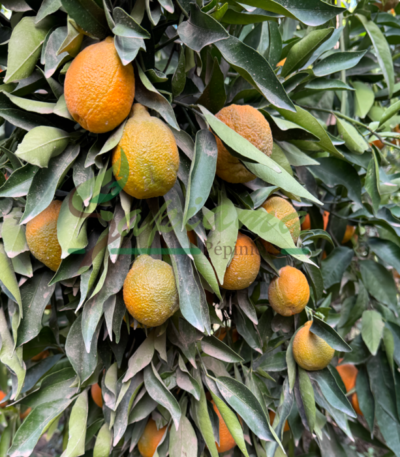
The NOUR is a mutation of the ‘Cadoux’ variety discovered in Morocco in 1962. It is characterized by a high foliage density. The fruit is spherical and medium-sized, with a slightly rough rind.
This is a productive and late-season variety, with maturity occurring from mid-January to late February or early March.
During the early years of its production, it was exported under the name ‘Sunerine’. It was only in the early 1990s that its name was changed to ‘Nour’.
NOVA
NULES
Also known as ‘Clemenules’, ‘Nulesina’, ‘Clementina Reina’, ‘Clementina Victoria’, and ‘Reina y Gorda de Nules’.
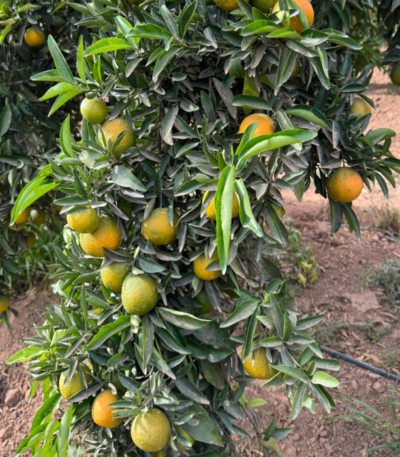
It is a mutation of the ‘Fina’ variety discovered in Nules, in the province of Castellón de la Plana, in 1953.
It is larger and slightly earlier than ‘Fina’; seedless and of excellent quality.
OROBLANCO
Oroblanco is a hybrid citrus fruit resulting from the cross between a diploid (2N) acid pummelo and a tetraploid (4N) seedy white grapefruit, developed in 1958 at the University of California, Riverside, by Drs. Cameron and Soost. This vigorous, large tree with a slightly spreading habit produces flattened oblong fruits with a smooth greenish-yellow rind that is thicker than that of typical grapefruits. Its very pale yellow, seedless flesh offers a mild, pleasant, and slightly sweet flavor. Oroblanco ripens from December to March and holds very well on the tree, making it a particularly appreciated variety.
OROGRANDE
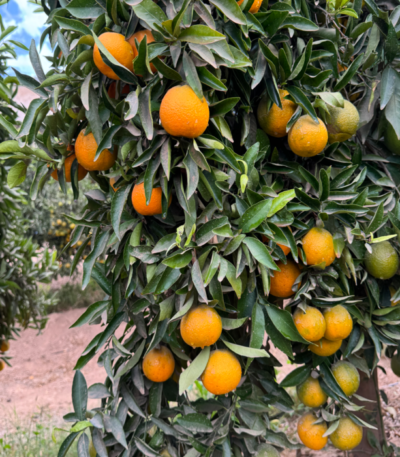
The Orogrande It is a mutation of the Nules clementine of unknown origin. This selection was introduced in South Africa in 1992.
The fruit is larger and more uniform in size than that of Nules, with slightly earlier maturity.
The tree has a fairly rounded shape, similar to that of Nules, although it can sometimes exhibit a slightly upright growth habit.
OUASSIF
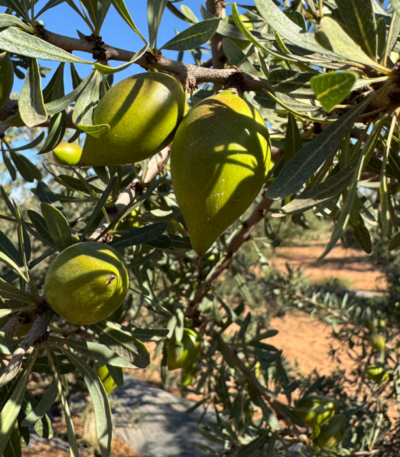
The Ouassif argan tree is vigorous and sparsely thorny, flowering throughout the year, which allows for continuous production of seeds and flowers simultaneously. At maturity, it can produce over 100 kg. This variety does not exhibit alternate bearing. The fruits are elongated and are notable for a crushing yield of 25% and an oil content of 55%. The harvest period extends from March to October. Argan oil quality and overall yield depend on several factors, including fertigation programs, orchard management, planting region, and climatic conditions. This variety is also remarkable for its drought resistance, making it an ideal choice to face the challenges of climate change.